
The season you pick will be the difference between a good trip and a bad one in these parts. Autumn and spring tend to be the most even handed; winter is for those who are up to cold nights and have made the necessary preparations; then there is summer when it is generally too hot to camp or put in a long walk with any comfort. See our guide to best seasons Flinders Ranges hiking for more detail.
My name is Stella Ashbury and I can tell you that the ranges will not be kind to heroic optimism, they require some forethought. An agreeable afternoon has a way of turning into a frigid night, unsealed roads get rough with rain and the weather is prone to sudden shifts. Here I set out what one needs to know by way of practical preparation, access and fire rules for the Flinders Ranges, Mount Remarkable, Arkaroola and the surrounding country.
An Overview of Seasonal Conditions
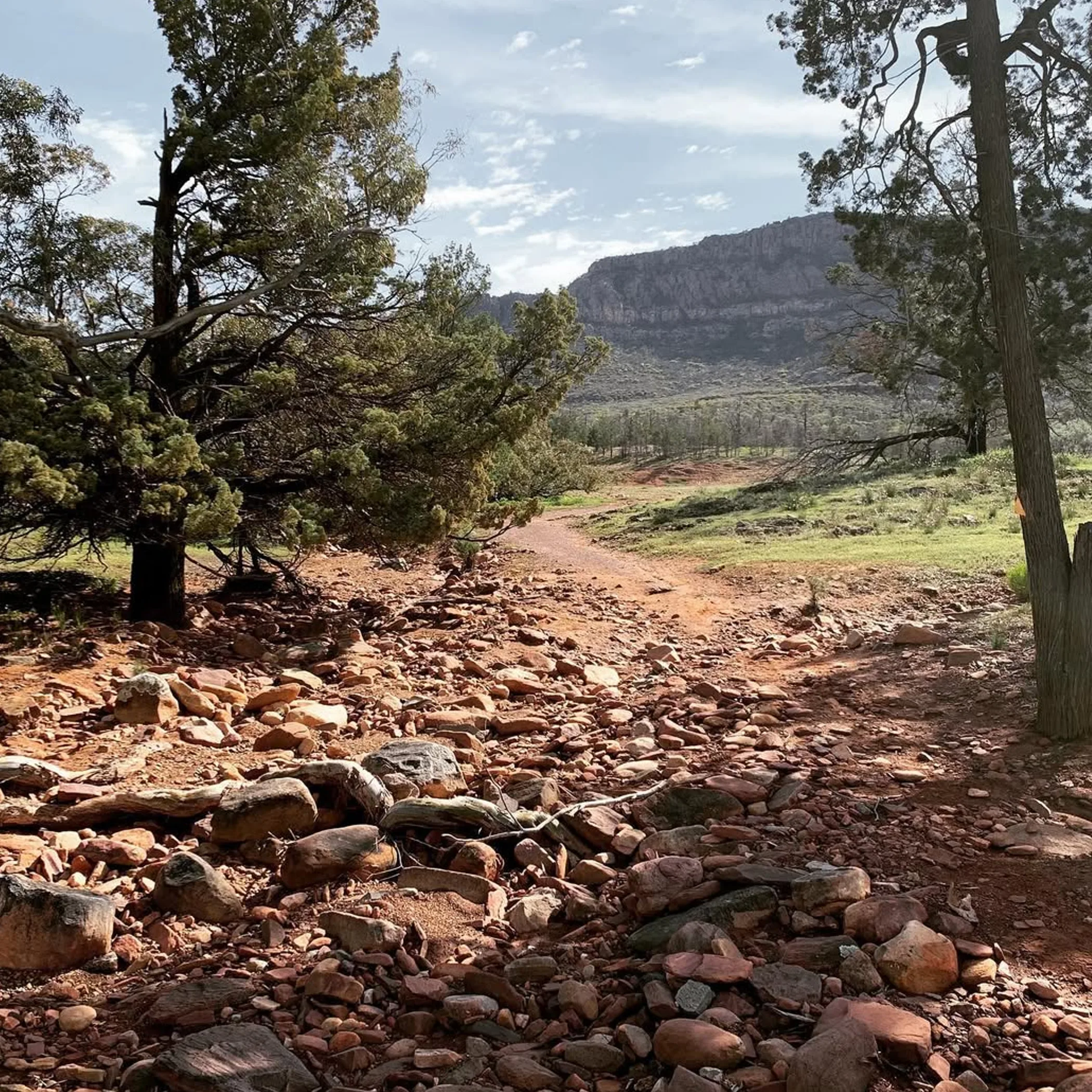
It is well to have an idea of the prevailing pattern so as to select a trip commensurate with your equipment and how much discomfort you will put up with. Do not think of the ranges as having a single climate though; verify the road, campground and park in question before you depart.
What follows is more of a guide to planning than anything definitive. One year can be different from the next and conditions are subject to wind, elevation, open ground and rainfall.
| Season | Typical camping character | Advantages | Concerns | Who it is for |
|---|---|---|---|---|
| Autumn | Mild during the day, cool at night | You can camp and walk in comfort | Changing rainfall and cold evenings | The majority of campers and walkers |
| Winter | Crisp days and cold after dark | Favourable for daytime pursuits | Wind, frost and sleeping in the cold | Hikers and campers who are prepared |
| Spring | Weather is comfortable if changeable | Wildflowers and moderate temperatures | Fire risk builds as the season goes on and there is wind and rain | Walkers that keep an eye on the forecast |
| Summer | Not much suited to camping given the heat | Campgrounds are quiet when it cools down | Track closures, fire danger and heat stress | Those with experience and some flexibility |
Easier Days in Autumn
There is a good deal of compromise to be had in autumn between the day and the overnight hours. The summer’s worst is over but you may still find some warmth in the landscape come afternoon. In the Flinders Ranges many would say it is the ideal time to be camping. You do not have to run from the sun to start a walk, nor melt at the stove to put dinner on, and you can sit out and boil the billy in peace. Put a warm layer in the pack regardless, desert and range nights have a habit of getting properly cold once it is dark.
Things to be aware of
In a matter of hours bright and calm can give way to something windy and chilly. Exposed ridges will be far colder than a sheltered gully. There is little space taken up by a windproof layer and beanie and a fleece which will spare you an unpleasant evening.
Then there is the rain. Even with a dry forecast the tracks can be wet if a front has been through. Do not make the mistake of thinking your vehicle’s clearance is enough for every unsealed road you come across in a remote area; take the local advice first.
No Shock To The System In Winter
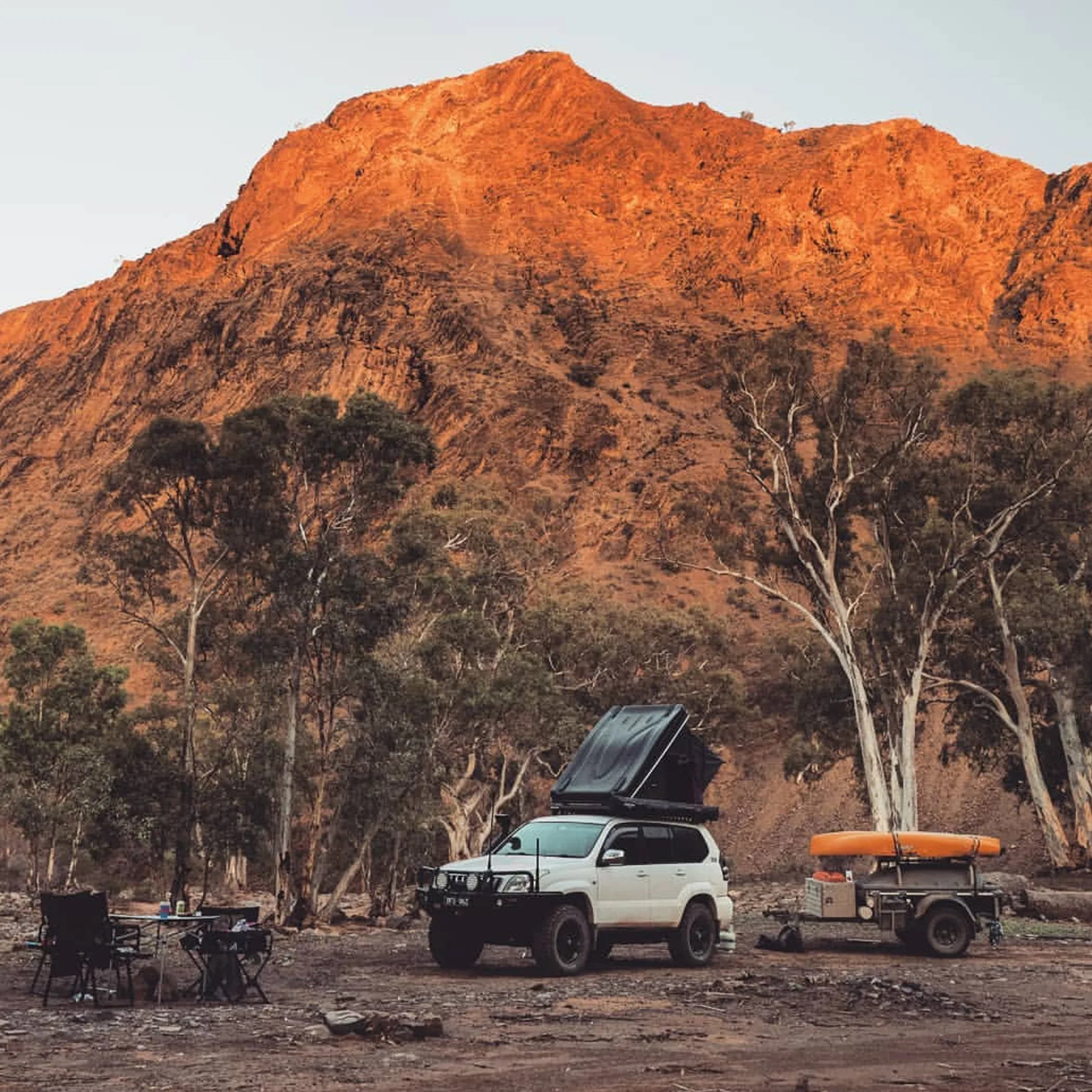
If you are of a mind to have clear and cold days instead of the summer heat, winter is to your liking. For walking the daytime is fine, but be under no illusion about the drop in temperature at night in the open country.
Access is usually more dependable in winter than in the wake of heavy rain, but dependable is not the same as easy. A thin mattress or a sleeping bag that is not up to the task will be found out in short order by the cold ground and the wind. The ground makes no apologies for taking your body heat.
Insulation is key
See to it your sleeping bag is rated below the minimum in the forecast and use a mat to insulate from the ground. Have some dry socks and clothes in a sealed bag for camp. A hot drink at night is nice but no substitute for being properly insulated.
Shorter walks with plenty of stops make sense in winter. What was an easy route at midday is less tempting once the sun is gone and the wind picks up. Make sure someone knows where you are and your expected time back along with your vehicle details, especially when you are away from the busier sections of the park.
A Change With Spring
Spring offers pleasant walking but the landscape can be quick to change. You might have cool weather and rain in the early part of the season and by later spring the days are warmer, the grasses drier and the risk of fire is higher. It is a popular time for a walk on account of the comfortable temperatures and what the vegetation does after a rain. One has to put more stock in the forecast this season than in what last year may have taught. Then there is the matter of a wet spring impeding road access or a dry, windy one and the attendant fire hazard.
Plan your movements with the weather in mind
On the morning you are due to travel and prior to any extended walk, look at the forecast for wind and fire data. Should it indicate thunderstorms, extreme heat or high winds, alter the itinerary. There is no failing in having a plan that can be adapted; sensible bush travellers do it to keep their holiday from becoming an incident report.
Insects are to be expected by those making the most of spring. Have some repellent to hand, see that food is well sealed and put on a head net when things get trying. The mozzie is diminutive enough but has plenty of confidence.
The Summer Heat
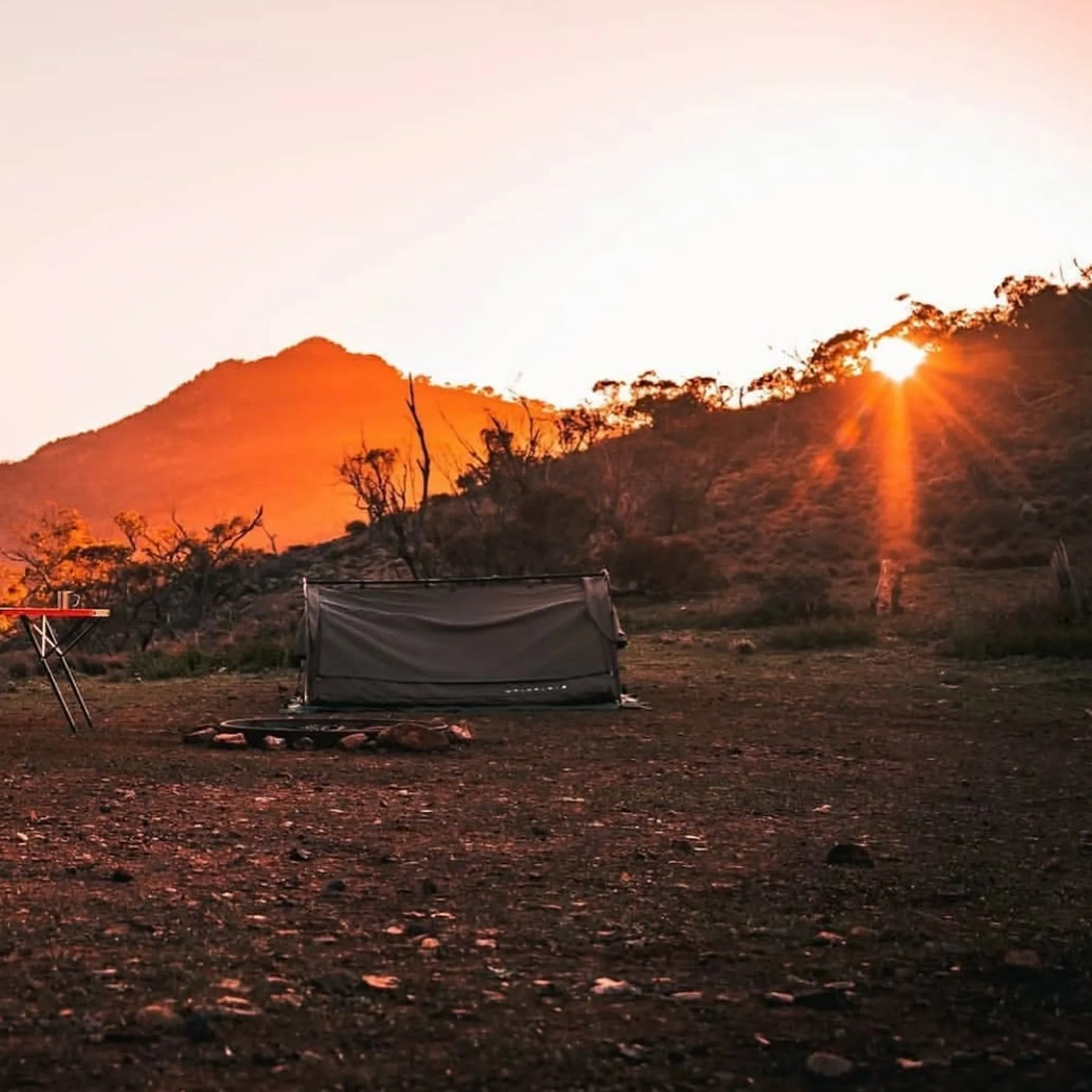
Much of the Flinders Ranges and other ranges in South Australia are not fit for casual camping come summer. Between the daytime temperatures and hot ground, lack of shade and water needs as well as the risk of fire, there are serious hazards.
Camping in these conditions is not out of the question, yet conservative calls are called for. Make an early start, have sufficient water for the route you will take and a vehicle recovery plan, and eschew being out in the open at the height of the day. A cool morning is no guarantee of a safe afternoon.
Some would be better off not travelling in summer
Remote camping is best left to the experienced. Beginners, the elderly, young children and anyone with a medical condition that does not cope with heat or who cannot be sure of water and communications should stay away. Even a dog that seems up to it can have trouble on hard ground and hot tracks.
Where a summer trip is unavoidable, opt for a maintained campground where access is known and make short work of the itinerary with an easy way out. Arkaroola and the like can be worth it, but with the distance and heat and paucity of services, a rescue plan cobbled together at the last minute is no plan at all.
Campfire safety and the rules of fire
In the Flinders Ranges one of the first things to consider in any camping weather plan is fire restrictions. In a Fire Danger Season campfires may be prohibited or restricted; a Total Fire Ban brings further limits to the district.
Before you go, consult the South Australian Country Fire Service for current warnings and preparation advice, and their fire safety information. The CFS and Alert SA app will have the latest, though phone coverage in the ranges can be spotty.
No chancing it when you cook
Do not be under the impression that a fire ring at the campground gives licence for a fire; park rules and any extant restrictions come first. See to it that you know the rules for the location before you put on a gas or liquid fuel barbecue.
- Confirm the status of any Total Fire Ban or Fire Danger Season.
- Make sure the campground allows for campfires and cooking appliances.
- Have drinking water in reserve for emergencies and cooking as well as the people.
- Extinguish any permitted fire in full and heed local instructions.
- Heed any closure or warning from the authorities and be off.
Do not leave coals to themselves, collect timber that is not allowed or set fire to rubbish. Dry grass needs little provocation and embers will be taken further by the wind than one might think.
Rain and the state of the track
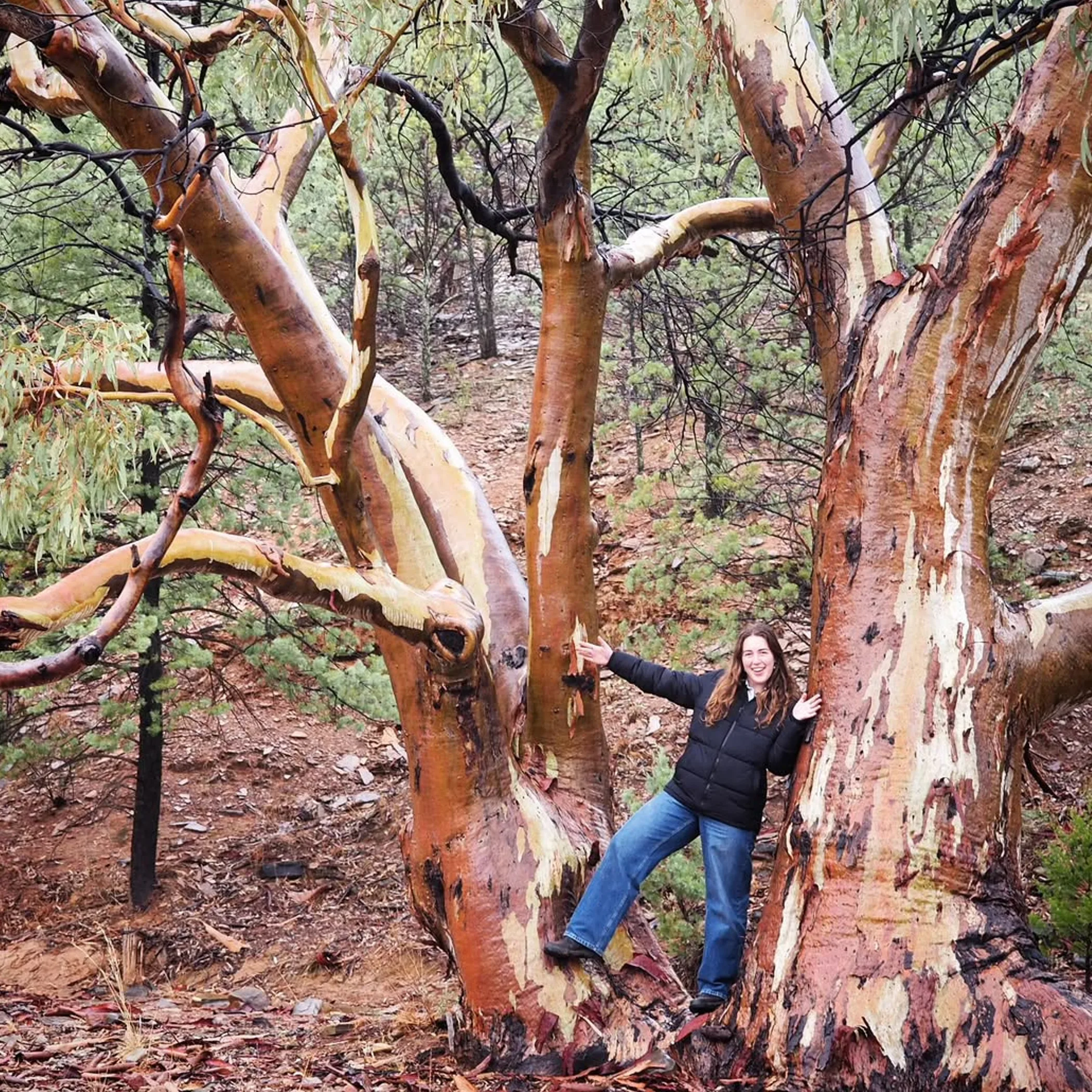
A bit of rain will change how you can get about in the ranges. Creeks and low crossings can flash flood from rain that has fallen some distance off, and unsealed roads are liable to be corrugated, slippery or closed.
Access to a Flinders Ranges campground is a function of the park and its tracks, the vehicle you have and how much rain has been around. In dry weather a two-wheel-drive will get you to certain established campgrounds, but 4WD or high clearance is needed for others. Get the lay of the land from road notices and local sources. Fire restrictions during the Fire Danger Season must be observed to ensure safety and legal compliance while camping.
Rough roads
Folks are often taken in by the notion that because another car was on the road yesterday it is safe. One storm can put mud, washouts and fallen branches on what was an ordinary looking route on the map.
Should you see water on the road, put a stop to it and make an assessment. Unknown floodwater is not to be driven through. Put aside more time than the mapping application would have you believe, keep a reserve of fuel where there are few services and turn back if need be. Time is to be had for a tyre check or to put in a good word with the wildlife and take a photograph.
Parks and where to put up
There is a range of camping to be had in the Flinders Ranges, from the remote with its scant facilities to the developed park campground. Visitors will make of Ikara-Flinders Ranges National Park a top choice, and for something else in the Southern Flinders Ranges there is Mount Remarkable National Park.
A degree of forethought is called for in Arkaroola given its remoteness. Do not put stock in a wide ranging search result that lumps everything north of Adelaide under “Flinders Ranges” when you need to know the particulars; verify the exact location. There will be variations in access, what is on offer and the rules for booking at Kings Site Campground and the like.
The Site And Your Trip
| Camping option | What one will find | Who it is for | Things to check |
|---|---|---|---|
| An established national park campground | Basic facilities and defined sites (location permitting) | Those new to the range or in for a short time | On water, toilets, vehicle access and any closures or bookings |
| A bush campground out in the remote | You are more on your own with fewer services | Experienced types wanting some quiet | Recovery options, 4WD access, water and communications |
| In the Arkaroola area | Distinctive terrain, remote roads and not much by way of services close by | Travellers who can be flexible | Advice on local access, weather, fuel and the state of the track |
Fees and permit type will differ from one park or campsite to another and a booking with the National Parks and Wildlife Service SA may be in order. Put aside money for the odd detour or an unplanned night as well as for food, fuel and the campground itself.
Preparation Is Key
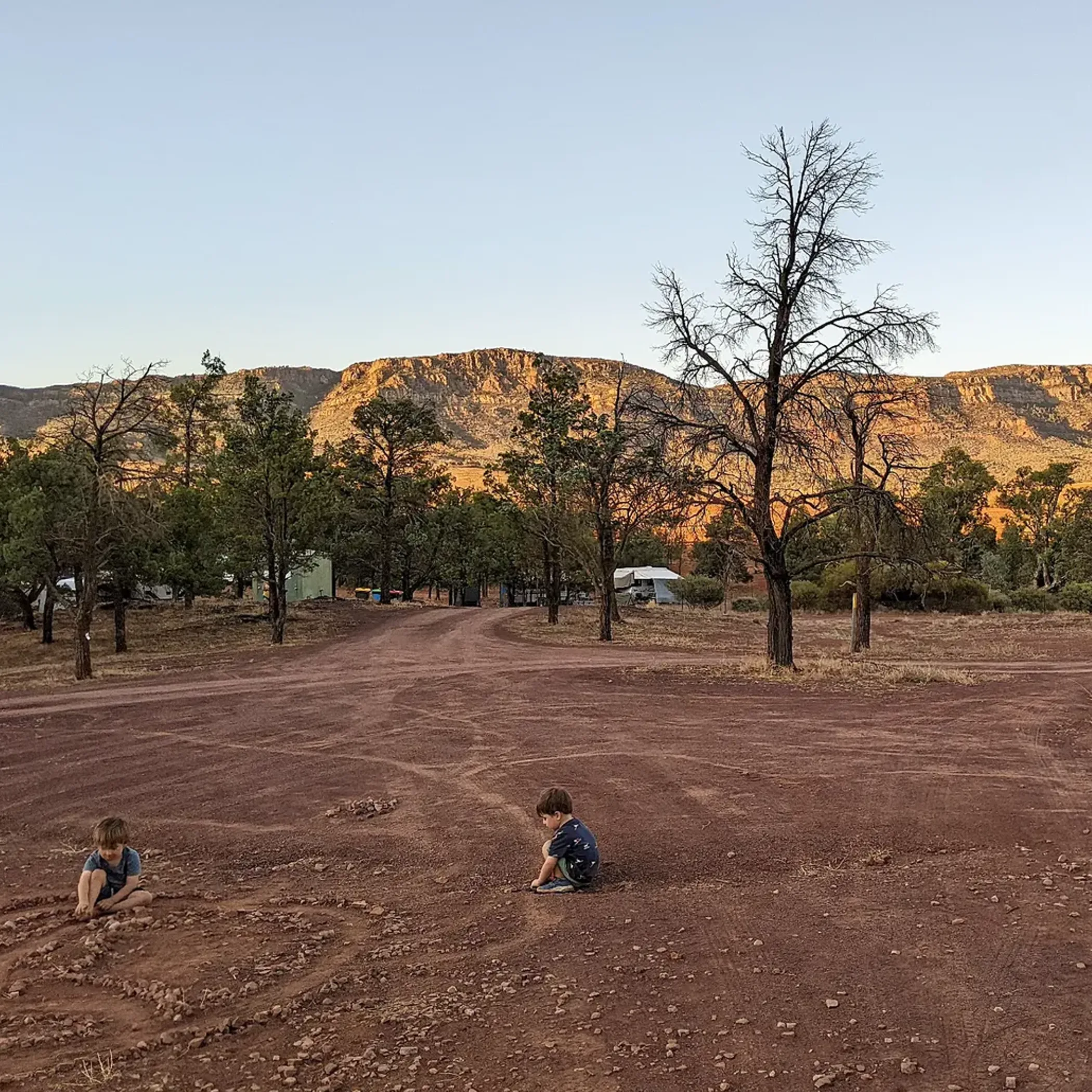
Proper preparation means there are fewer decisions to be made should conditions take a turn for the worse. It spares one from the old bush blunder of showing up late, hungry and fatigued to find the gate shut.
Make your plans from the nearest source of reliable fuel and supplies, not whatever town comes to mind. Have your maps downloaded for when there is no signal, put down the details of the campground and let someone you trust know where you are headed and when you will be back.
Be Ready For What You Will Encounter
- Right before you set off, look at the road and weather, any fire danger or notices from the park.
- Have on hand a repair kit, first aid, sun protection, warm clothing and provisions.
- Give the vehicle once over: clearance, fuel range, recovery gear and the condition of all tyres.
- On a remote outing a satellite communicator is a must.
- Dispose of rubbish and waste properly and leave none behind.
There is little in the way of transport once the larger regional centres are left behind. A private car is the sensible way to go for remote camping, though those without the right vehicle or off-road skills might prefer an organised tour. Public transport will get you to the towns but not the last leg to the campground.
Making A Day Of It
When time is limited to a day, stick to a maintained route and a walk of reasonable length from your base. There is no point in driving most of the day to some far off place and then having to make the return after dark.
Pick an area and have a fallback viewpoint or easy walk in reserve. For a first trip an established spot in Ikara-Flinders Ranges National Park is less trouble than trying to cover several distant tracks. A well thought out plan is preferable to a hasty grand tour that leaves you with a flat and a phone with no service.
Hiking The Flinders Ranges
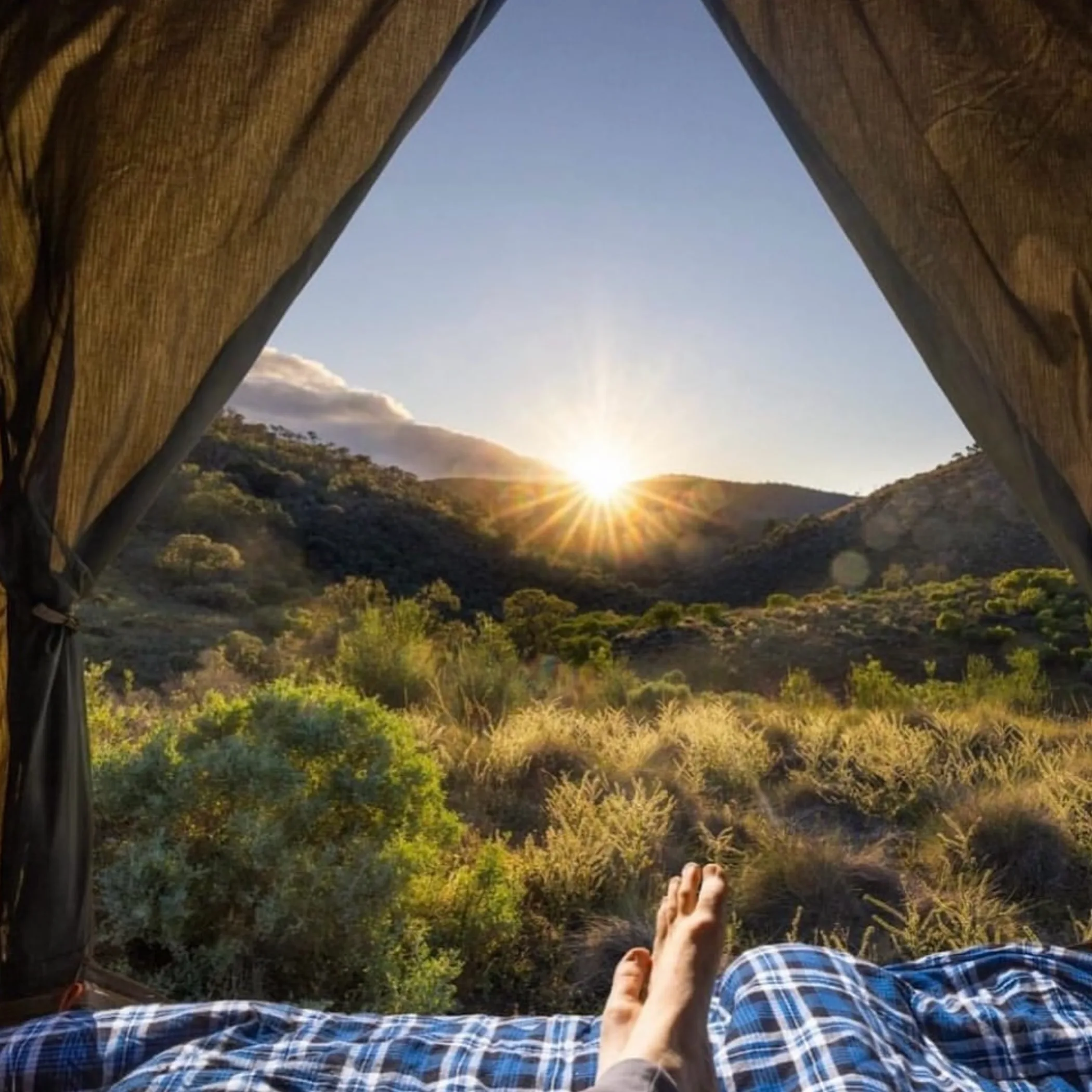
Autumn, winter and spring tend to be the best times, subject to the forecast and how exposed the walk is. Autumn and spring are a comfortable bet. If you do not mind an early sunset and cold in the morning, winter is fine for the prepared walker. One cannot put a date on the ideal time to be in the Flinders Ranges. It is a matter of picking the season that is right for your vehicle, your fitness and what you can stand in the way of heat, not to mention the equipment at hand. You would do well to look over the route in detail; the safety demands of an afternoon amble to a campground are not the same as those of a protracted walk on an open ridge.
Most Visitors Make These Mistakes
It is not uncommon for travellers to pack with an eye on the day’s temperatures and give no thought to what comes after dark. Some will take a weather report as their word and think they have permanent rights of entry to the national park, or they will not allow enough time for an unsealed road once it has seen rain.
The practical wisdom from any seasoned local guide or tour operator is to decide for yourself rather than let the terrain make the call for you. If you are running low on daylight, water or fuel, turn back. You are not depriving yourself of anything, it is simply the way to get home and have a story to tell.
Camping Questions We Are Often Asked
The following address the sort of decisions one has to make in planning a trip to the ranges. Since restrictions and conditions are subject to change, verify the details for your particular park and dates.
South Australia’s Better Campgrounds
This is relative to your vehicle and how remote you want to be. The likes of Ikara-Flinders Ranges National Park, Mount Remarkable or the Arkaroola region have established sites to accommodate various types of traveller. But before settling on one, see what the bookings say and check on access, water, fire rules and any closures.
Where To Find The Most Beautiful Camping?
You will not find an objective answer. Some put a premium on the ruggedness of the Flinders Ranges or the valleys and tracks at Mount Remarkable, others on the seclusion of Arkaroola. In the end the best spot is where you can camp with some responsibility and not put your experience or gear to the test.
Ghost Camping
A term for when you put up camp in some out of the way part of the bush with no formal campground in sight. Do not mistake it for carte blanche to camp wherever you like. The environment, land ownership, waste disposal and park rules are still in force. Stick to an approved site unless you have permission and good information to the contrary.
Hidden Gems Of South Australia
There is much to be had on a quiet campground or a track not so well publicised but “hidden” is no synonym for unregulated. Seek out the lesser walks in a regional reserve or an established park instead of venturing into closed country. And check with the locals before you put an unfamiliar track to the test or put a remote place on the map.
Is The Flinders Ranges For Beginners?
With sensible preparation and milder weather there is no reason why not, in an area that is well established. A reliable car and a short walk from a maintained campground are a good start. Leave the long exposed routes, summer excursions and dubious creek crossings to those with more experience.
A Word To Those Travelling The Ranges
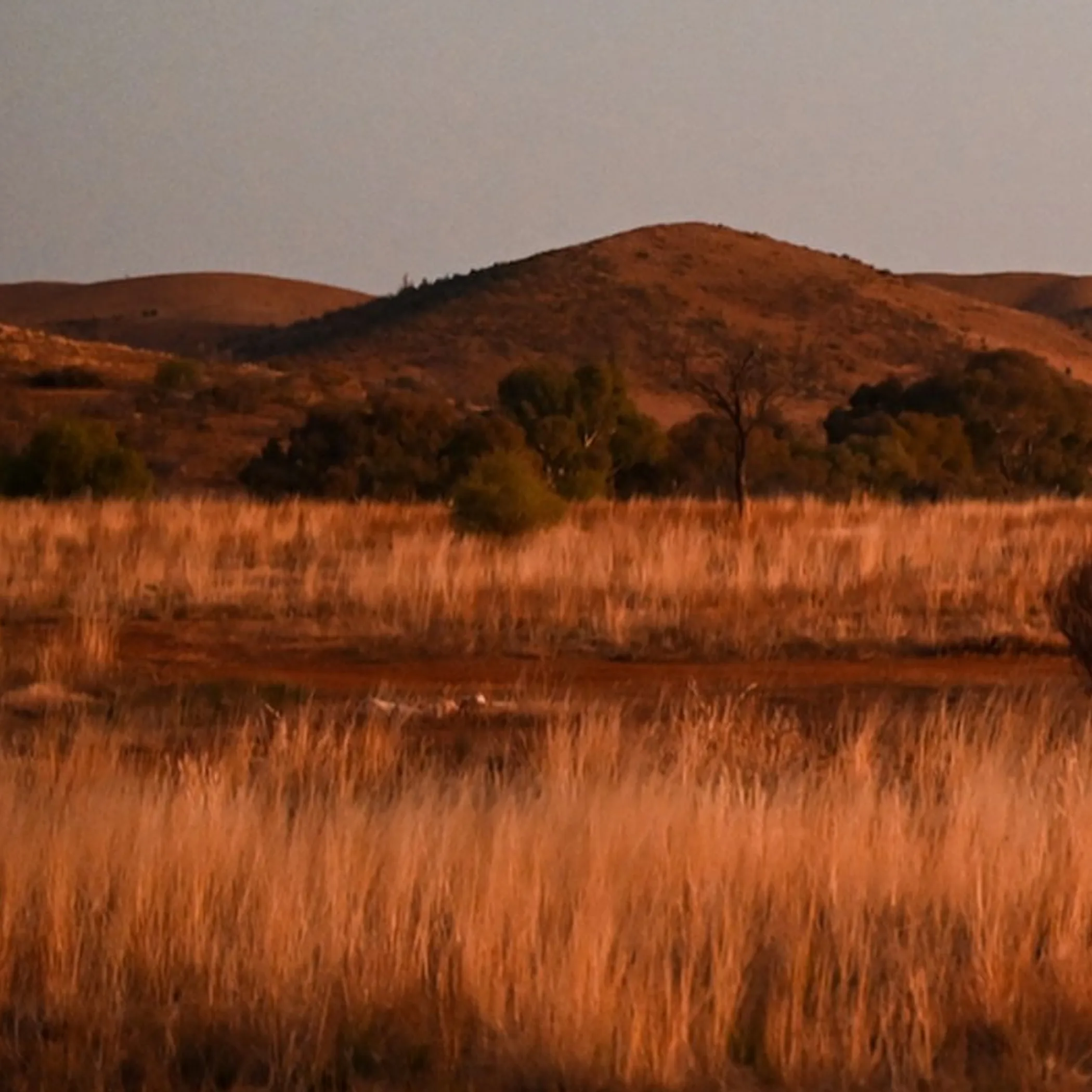
Autumn and spring tend to be the least trouble for camping in the South Australian ranges. Winter is worth the effort if you are prepared for the cold, while in summer you need to factor in a good deal more by way of safety. Before you set off, have a word with CFS or Alert SA and the National Parks and Wildlife Service SA for the latest on the roads.
Allow for delays and pack for the night, heed the fire restrictions and be open to changing your plans. When the wind is up and the track is as rough as guts, it is some comfort to know the ranges are not going anywhere.